7 Powerful Apple Credit Card Perks – Daily Cashback & No Fees
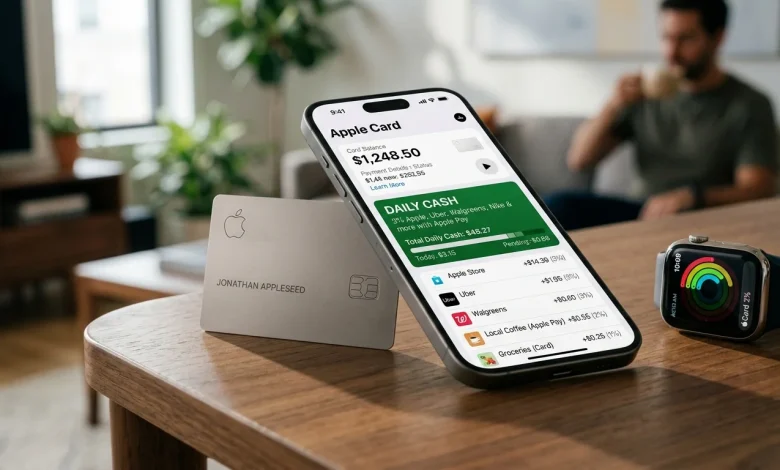
Table of Contents
The Apple Credit Card, commonly known as Apple Card, represents a significant evolution in the realm of personal finance, blending seamlessly with Apple’s ecosystem to offer a unique credit card experience. Introduced by Apple Inc. and issued by Goldman Sachs, with a transition to JPMorgan Chase anticipated over the next two years, it has reshaped expectations for digital credit management. From its initial launch in August 2019, the Apple Card has consistently emphasized transparency, robust security features, and a compelling daily cashback rewards program, distinguishing itself in a competitive market. Its design ethos focuses on simplifying financial interactions, making it an attractive option for users deeply embedded in the Apple product universe.
Core Features: Design, Security, and Wallet Integration
At its heart, the Apple Card is a digital-first credit card, residing primarily within the Wallet app on compatible Apple devices like the iPhone, iPad, Apple Watch, and Mac. This integration provides users with an intuitive interface for managing their finances, viewing transactions, and making payments directly from their devices. The Wallet app offers a visually appealing and easy-to-understand breakdown of spending, categorized by color-coded groups, which helps users track their financial habits effortlessly. This deep integration ensures that the card is not just a payment tool, but a comprehensive financial management hub.
Beyond its digital presence, the Apple Card also offers a physical, laser-etched titanium card, designed for situations where Apple Pay is not yet accepted. This sleek, minimalist card stands out due to its striking design, which notably lacks a visible card number, CVV security code, expiration date, or signature on its surface. This design choice enhances security by minimizing exposed sensitive information. For online purchases or in-app transactions where Apple Pay isn’t an option, users can access a virtual card number securely stored within the Wallet app. Operating on the Mastercard network, the Apple Card enjoys global acceptance, allowing it to be used virtually anywhere Mastercard is processed.
Understanding Daily Cash: The Rewards Program
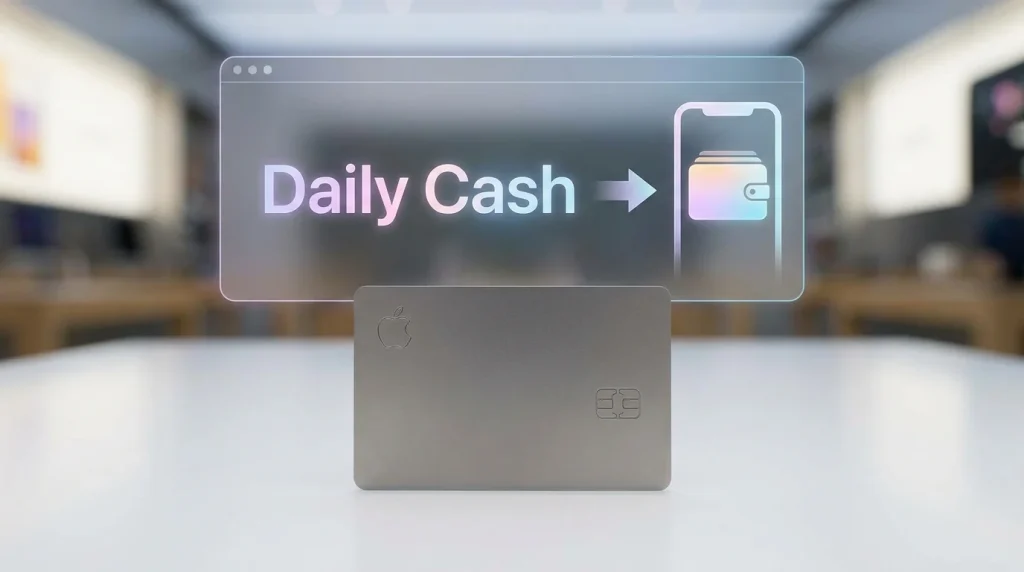
One of the most compelling aspects of the Apple Card is its innovative Daily Cash rewards program. Unlike traditional credit card rewards that often involve accumulating points or waiting for monthly statements, Daily Cash provides real cash back that is disbursed to the user every day after a purchase clears. This immediate gratification allows users to access and utilize their rewards without delay, eliminating concerns about points expiring or losing value. There are no limits to the amount of Daily Cash a cardholder can earn, making it a continuously rewarding system for frequent spenders.
The Daily Cash program is structured across various tiers, offering different percentages of cash back depending on the method and location of the purchase:
- 3% Daily Cash: This is the highest tier of reward and is earned on all purchases made directly from Apple, including products, services like Apple Music and Apple TV+, and apps from the App Store. Additionally, users receive 3% Daily Cash on purchases at select merchants when using Apple Card with Apple Pay. These partnered merchants include popular brands such as Uber (for rides and Uber Eats), Nike, Walgreens, ExxonMobil, Ace Hardware, Booking.com (for eligible stays and car rentals), ChargePoint (for EV charging), and Duane Reade. This focused reward structure significantly benefits users who frequently engage with Apple’s ecosystem and its partners.
- 2% Daily Cash: For all other purchases made using Apple Card with Apple Pay, users earn 2% cash back. This broad category covers the vast majority of daily transactions at merchants that accept Apple Pay, from local coffee shops to major retailers.
- 1% Daily Cash: When Apple Pay is not accepted, and the physical titanium Apple Card or the virtual card number is used for transactions, cardholders receive 1% Daily Cash. This ensures that users always receive some form of cashback, regardless of how they make their purchase, providing consistent value across all spending.
How Daily Cash Works and Redemption Options
The simplicity of Daily Cash extends beyond its earning potential to its flexible redemption options. Once earned, Daily Cash is automatically deposited into the user’s chosen account, offering immediate utility. The primary destination for Daily Cash is often the Apple Cash card within the Wallet app. From there, users can instantly spend their cash using Apple Pay for purchases, send money to friends and family via Messages, or even withdraw it to a linked bank account. This versatility provides real financial freedom, allowing individuals to use their rewards in a way that best suits their needs.
A particularly appealing option for growing one’s savings is the ability to automatically direct Daily Cash into a high-yield Savings account, offered through Apple Card and provided by Goldman Sachs Bank USA. This feature allows Daily Cash to accrue interest, effectively transforming rewards into a passive income stream. For those who prefer to reduce their credit card balance, Daily Cash can also be applied as a statement credit, directly reducing the amount owed on their Apple Card account. This flexibility ensures that the rewards system is adaptable to different financial strategies, whether it’s immediate spending, saving for the future, or debt reduction.
For families, the Apple Card Family feature allows for shared accounts, where each participant receives unlimited Daily Cash for their own purchases. While owners and co-owners can open a Savings account, other participants in the family, especially those under 18, can direct their Daily Cash to an Apple Cash account, provided the family organizer has set it up.
| Daily Cash Reward Tier | Usage Scenario | Description |
|---|---|---|
| 3% Daily Cash | Apple purchases and select merchants with Apple Pay | Earned on all purchases directly from Apple (Apple Store, App Store, Apple services) and at specific partners like Uber, Nike, Walgreens, ExxonMobil, Ace Hardware, Booking.com, and ChargePoint when using Apple Card with Apple Pay. |
| 2% Daily Cash | All other Apple Pay purchases | Applies to all transactions made using Apple Card with Apple Pay at any merchant that accepts it, beyond the 3% select merchant category. |
| 1% Daily Cash | Physical titanium card or virtual card number | Received for purchases made with the physical titanium Apple Card or the virtual card number in situations where Apple Pay is not accepted. |
Financial Transparency and Management Tools
A cornerstone of the Apple Card’s philosophy is its commitment to financial transparency and empowering users with tools to manage their credit responsibly. A standout feature is its comprehensive Wikipedia entry on Credit Card detailing how the card operates with absolutely no fees. This means no annual fees, no foreign transaction fees when traveling internationally, and no late payment fees. This ‘no-fees’ approach significantly reduces the hidden costs often associated with traditional credit cards, making it simpler for users to understand and manage their expenses.
While the card prides itself on being fee-free, it does, of course, charge interest on outstanding balances. As of January 1, 2026, the variable Annual Percentage Rates (APRs) for the Apple Card range from 17.49% to 27.74%, based on the cardholder’s creditworthiness. These rates are clearly disclosed and can be viewed at any time within the Wallet app. The Apple Card encourages users to pay less interest by offering visual tools in the Wallet app that estimate the interest cost based on different payment amounts, allowing users to make informed decisions about their payments in real-time. Additionally, the card provides a grace period, typically 28 days from the end of the billing period, during which no interest is charged if the entire balance is paid in full by the due date.
A significant benefit for Apple enthusiasts is the availability of Apple Card Monthly Installments (ACMI). This feature allows cardholders to purchase eligible Apple products, such as iPhones, Macs, iPads, and Apple Watches, with interest-free monthly payments over a period of 6, 12, or 24 months. Crucially, users still earn 3% Daily Cash on the full purchase price of these products upfront, making it an attractive financing option.
The Wallet app further enhances financial management with robust tools for tracking spending. Users can view their current balance, recent transactions, and upcoming payments at a glance. Transactions are displayed in an easily digestible format, complete with merchant names and locations on Apple Maps, helping users identify and understand their purchases. Spending summaries can be viewed by week, month, or year, categorized by color to highlight different spending areas, aiding in budgeting and financial planning. Payment reminders are also available, helping users avoid late payments and manage their financial obligations effectively.
Enhanced Security and Privacy Measures
Apple Card is engineered from the ground up with security and privacy as paramount concerns, leveraging Apple’s expertise in these areas. A core tenet of its design is the commitment to user privacy: Apple explicitly states that it does not know what users bought, where they bought it, or how much they paid. Furthermore, Goldman Sachs, the issuing bank, does not sell or share user transaction data with third parties for marketing or advertising purposes. This strong privacy stance reassures users that their financial behavior remains confidential.
The card’s security is deeply integrated with Apple Pay technology, utilizing advanced features like tokenization and the Secure Element, a dedicated chip on Apple devices. When a card is added to Apple Pay, a unique Device Account Number is created and encrypted, which is used for transactions instead of the actual card number. Payments are authenticated using Face ID or Touch ID, ensuring that only the authorized user can approve purchases. This multi-layered security approach means that the actual credit card number is never transmitted during a transaction, significantly reducing the risk of fraud.
The physical titanium Apple Card reinforces security by omitting sensitive details like the card number, CVV, or expiration date on its surface. These details are stored securely within the Wallet app, accessible only after biometric authentication. For online purchases where Apple Pay isn’t supported, users can activate Advanced Fraud Protection, which periodically changes the virtual card’s security code to prevent unauthorized use. Additionally, the Apple Card integrates with iOS features like Stolen Device Protection, adding an extra layer of security for critical account changes or purchases when the iPhone is away from familiar locations. Transaction notifications can also be enabled, alerting users to every card use, helping them quickly identify and address any suspicious activity. As part of the Mastercard network, Apple Card holders also benefit from Mastercard’s Zero Liability Protection against unauthorized purchases and ID Theft Protection services.
Eligibility and the Seamless Application Process
Applying for the Apple Card is designed to be a streamlined and user-friendly experience, primarily conducted through the Wallet app on an iPhone or iPad. To be eligible, applicants must meet several key requirements: they must be at least 18 years old, a U.S. citizen or a lawful resident with a physical U.S. address (P.O. boxes are not accepted), own a compatible iPhone or iPad running the latest version of iOS or iPadOS, and have an Apple ID with two-factor authentication enabled. Additionally, applicants should not have a freeze on their credit report, as this can impede the application process.
The application process itself is notably quick and transparent. Prospective cardholders can apply directly from the Wallet app by tapping the ‘+’ icon and selecting “Apple Card,” or they can apply via the Apple Card website. The process involves entering personal information such as name, date of birth, phone number, the last four digits of their Social Security number, citizenship status, and estimated annual income. A significant advantage is that users can see if they are approved for the card and view their credit limit and interest rate offer without any impact on their credit score during the initial soft inquiry. Only upon accepting the offer will a hard inquiry be made, which may affect the credit score.
Upon approval, the digital Apple Card is instantly added to the Wallet app, allowing users to begin making purchases immediately with Apple Pay. The physical titanium card can then be requested through the Wallet app, if desired. This seamless application and instant issuance process underscore Apple’s commitment to user convenience and immediate access to financial services.
Conclusion
The Apple Card stands as a modern reinterpretation of the traditional credit card, deeply integrating with the Apple ecosystem to offer a holistic financial experience. Its compelling suite of features, including a fee-free structure, robust privacy and security measures, and the innovative Daily Cash rewards program, sets it apart in the credit card landscape. The instant gratification of daily cashback, coupled with flexible redemption options like direct deposits to Apple Cash or a high-yield Savings account, provides tangible value to users. With its intuitive financial management tools within the Wallet app, offering clear spending insights and interest-saving suggestions, the Apple Card empowers users to manage their finances with unprecedented transparency and control. For individuals seeking a credit card that prioritizes security, privacy, and rewarding everyday spending within a familiar digital environment, the Apple Card presents a highly attractive and forward-thinking solution.