6 Powerful Credit Card to Bank Transfer Methods – Costs, Fees & Alternatives
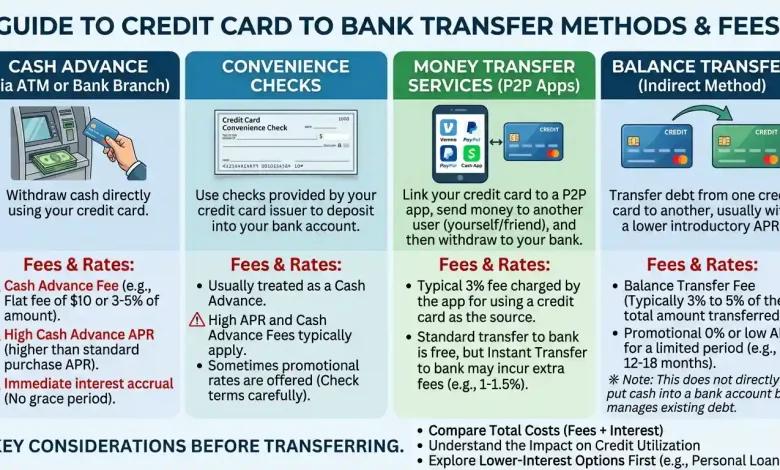
Table of Contents
Credit card to bank transfer methods, while seemingly straightforward, involve a complex interplay of fees, interest rates, and specific terms set by credit card issuers. While using a credit card for purchases is common, transferring funds directly to a bank account is generally viewed as an expensive last resort for accessing cash. It’s crucial for consumers to understand the various avenues available and the associated costs to make informed financial decisions and avoid falling into a cycle of high-interest debt. This comprehensive guide will explore the different methods, break down the fees involved, and offer insights into when and how such transfers might be considered.
Understanding Credit Card to Bank Transfers
At its core, transferring money from a credit card to a bank account means converting a portion of your available credit limit into liquid cash. Unlike standard purchases, which often come with a grace period before interest accrues, cash advances and similar transfers typically incur interest from day one, often at a higher Annual Percentage Rate (APR). This makes them a more costly way to access funds compared to using income or savings. Before considering such a transfer, it’s vital to recognize that this is essentially a short-term loan that needs to be repaid, usually with significant additional charges.
Cash Advances: A Direct, Costly Route
A cash advance is the most common and direct method for obtaining money from your credit card. It functions like a short-term loan against your credit card’s line of credit. The process for obtaining a cash advance can vary but generally includes:
- ATM Withdrawal: If you have a Personal Identification Number (PIN) for your credit card, you can use it at an ATM to withdraw cash, much like a debit card. You may need to request a PIN from your card issuer if you don’t have one.
- Bank Branch Visit: You can visit a bank branch (often the issuing bank of your credit card) with your card and a photo ID to request a cash advance from a teller.
- Convenience Checks: Some credit card issuers provide “convenience checks” that allow you to write a check against your credit line. You can write the check to yourself and deposit it into your bank account.
Cash advances are notorious for their high costs. They typically come with a specific cash advance fee, which is often a percentage of the amount withdrawn (commonly 3% to 5%) or a flat fee (e.g., $10), whichever is greater. Furthermore, the APR for cash advances is usually higher than the standard purchase APR, and interest begins accruing immediately, with no grace period. This means that even a small cash advance can quickly become expensive if not repaid promptly.
Balance Transfer Checks: A Less Common Method
While primarily designed for moving debt from one credit card to another, balance transfer checks (also known as convenience checks) can sometimes be used to deposit funds into your bank account. If you receive checks with a balance transfer offer, you could theoretically write one to yourself and deposit it. However, this method is still treated similarly to a cash advance by many issuers, incurring balance transfer fees (typically 3% to 5% of the amount transferred) and immediate interest accrual, often at a promotional or higher APR. Some credit unions might offer balance transfers with lower or no fees and promotional APRs, but these are often for transferring debt, not for generating cash.
Third-Party Payment Apps: Convenience with Caveats
Several peer-to-peer (P2P) payment apps allow users to link their credit cards and transfer money. Popular apps like PayPal, Venmo, and Cash App can be used for this purpose. However, using a credit card for these transfers almost always incurs a transaction fee, typically around 3% of the amount. For instance, PayPal charges a fixed fee of $0.30 plus 2.9% of the transaction amount, while Venmo and Cash App charge a 3% fee for credit card-funded payments. It’s crucial to note that many credit card companies will classify these transactions as cash advances, triggering additional cash advance fees and immediate, higher interest rates from your card issuer, on top of the app’s own fees. Some apps, such as Apple Cash, Google Pay, and Zelle, do not allow credit cards for sending money, requiring a linked bank account or debit card instead.
Direct Bank-Initiated Transfers: When Your Card Issuer Allows It
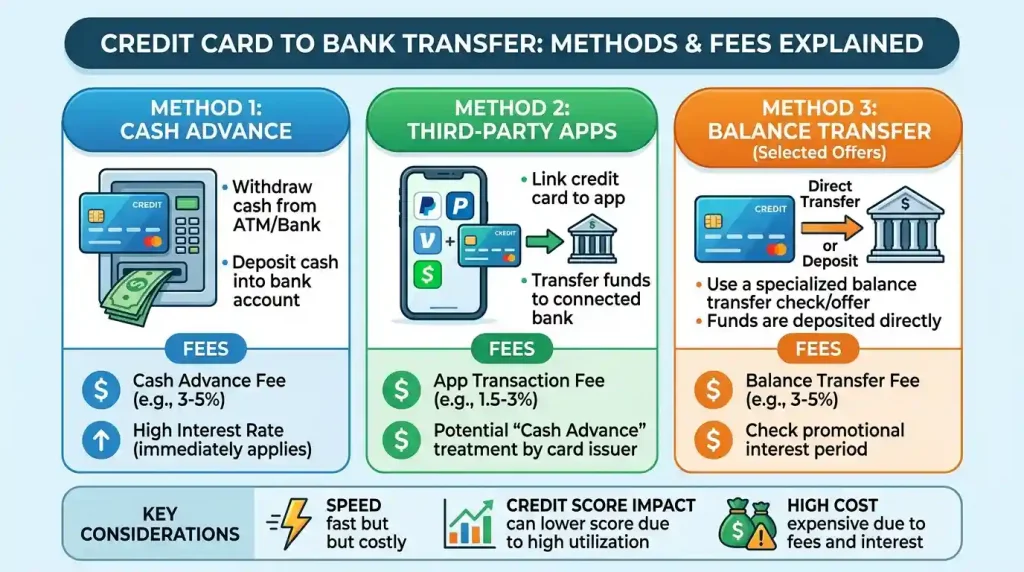
In some cases, if your credit card and bank account are with the same institution, you might be able to initiate a direct transfer online or through the bank’s mobile app. This typically involves logging into your online banking, selecting your credit card as the source, and your bank account as the destination. Even in these scenarios, the transfer will almost certainly be treated as a cash advance, meaning cash advance fees and immediate interest apply. While convenient, it doesn’t bypass the high costs associated with accessing cash from a credit line. Some banks in certain regions (e.g., UK cards) explicitly offer “money transfers” from a credit card to a bank account, often with a one-off fee (around 3-4%) and the possibility of being included in 0% interest period offers, but checking terms is essential.
Fees and Costs Breakdown: What to Expect
Understanding the full spectrum of fees and interest rates is paramount before initiating any credit card to bank transfer. These costs can quickly erode the transferred amount and lead to a more significant debt burden. Here’s a breakdown:
| Type of Fee/Cost | Description | Typical Range | Impact on Transfer |
|---|---|---|---|
| Cash Advance Fee | A one-time fee charged by the credit card issuer for withdrawing cash. | 3% to 5% of the advance amount, or a flat fee (e.g., $10), whichever is greater. | Deducted from the amount received or added to the credit card balance immediately. |
| Cash Advance APR | The interest rate applied to cash advances, which is usually higher than the standard purchase APR. | Often several percentage points higher than purchase APR (e.g., 25-30% or more). | Interest accrues from the transaction date; no grace period. |
| Balance Transfer Fee | A fee charged by the card issuer when you transfer debt or use a balance transfer check for cash. | 3% to 5% of the transferred amount. | Added to the transferred balance, increasing the principal you owe. |
| ATM Fees | Additional fees charged by the ATM operator if you use an out-of-network ATM for a cash advance. | Varies, typically $2-$5 per transaction. | Increases the immediate cost of getting cash. |
| Third-Party App Fees | Fees charged by payment apps (e.g., PayPal, Venmo, Cash App) for credit card-funded transactions. | Around 2.9% to 3% of the transaction amount. | An additional cost on top of potential cash advance fees from your card issuer. |
| Interest Accrual (No Grace Period) | Unlike purchases, interest on cash advances and related transfers starts immediately. | From day one. | Every day the balance remains unpaid, interest charges grow. |
Minimizing Costs and Risks of Credit Card Transfers
Given the high costs, transferring money from a credit card to a bank account should ideally be a last resort. However, if absolutely necessary, there are strategies to minimize the financial impact:
- Understand Your Card’s Terms: Before any transfer, thoroughly review your credit card agreement for specific cash advance or balance transfer fees, APRs, and limits. Your card issuer’s website or customer service can provide these details.
- Compare Alternatives: Explore other options first, such as a personal loan, borrowing from friends or family, or even using an emergency fund. These might offer significantly lower interest rates and fees.
- Pay Back Immediately: If you must take a cash advance, aim to repay the full amount as quickly as possible to minimize the interest accrued, as it starts immediately.
- Utilize Promotional Offers (with caution): If considering a balance transfer for cash, look for cards with 0% introductory APRs on balance transfers. While rare for direct cash to bank, if available and structured correctly, it could offer a temporary reprieve from high interest, but the balance transfer fee will still apply. Ensure you can pay off the balance before the promotional period ends to avoid high deferred interest.
- Check for Card-Specific Loan Options: Some card issuers, such as Chase and Citi, offer card loans that allow you to borrow against your credit limit at lower interest rates than traditional cash advances, sometimes at your typical purchase APR or even lower. This can be a more affordable alternative.
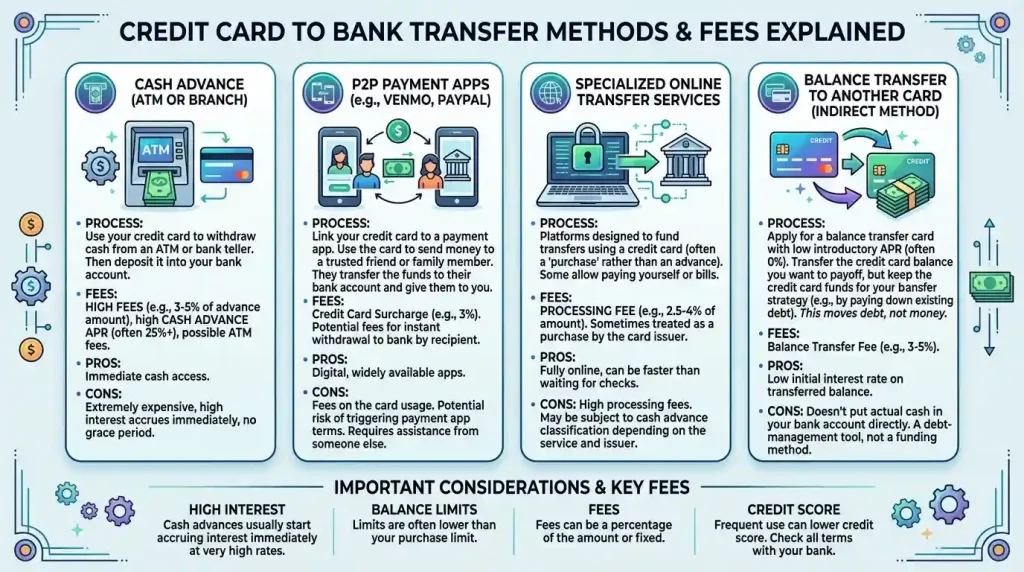
For individuals facing a financial crunch, a credit card cash advance can be a quicker option than some alternatives, but it’s important to weigh this against the substantial costs. For example, a $5,000 cash advance at a 25% APR and a 5% cash advance fee could result in $1,500 in fees and interest over a year if the balance isn’t paid down. In some extreme cases, like avoiding predatory payday loans, a cash advance might be the lesser of two evils, but careful consideration is always advised. For further understanding of consumer financial rights and responsibilities, authoritative resources such as the Consumer Financial Protection Bureau (CFPB) or a reputable financial news source like Reuters Finance News can provide valuable insights into current regulations and market trends.
Conclusion
Transferring money from a credit card to a bank account is a method of accessing funds that, while possible through several avenues, is generally discouraged due to its high cost. Methods like cash advances, balance transfer checks, and even transactions via third-party payment apps often incur significant fees (typically 3-5% of the transaction amount) and immediate, higher interest rates compared to standard credit card purchases. While situations may arise where such a transfer seems necessary, a thorough understanding of the associated fees and interest accrual is critical. Exploring alternatives, diligently researching your card’s terms, and prioritizing rapid repayment can help mitigate the financial burden. Ultimately, responsible financial planning and maintaining an emergency fund are the most effective ways to avoid relying on these expensive credit card features.