7 Best Credit Cards for Cashback & Signup Bonuses in 2026
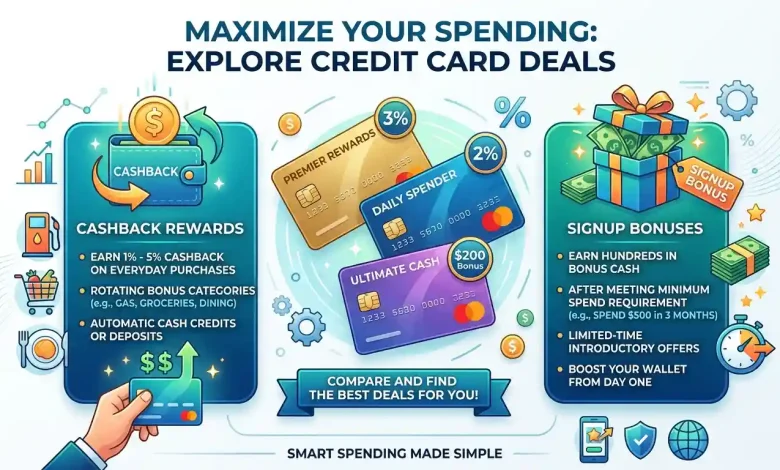
Table of Contents
Credit Card Deals with Cashback and Signup Bonuses offer an enticing avenue for consumers to derive tangible value from their everyday spending. In an increasingly competitive financial landscape, credit card issuers are continually innovating their reward programs to attract and retain cardholders. These incentives, ranging from direct cash rebates to substantial welcome offers, can significantly enhance a consumer’s purchasing power and financial well-being when utilized strategically. Understanding the nuances of these deals is paramount to unlocking their full potential and avoiding common pitfalls.
Introduction to Maximizing Credit Card Rewards
The world of credit card rewards is vast and varied, but two of the most popular and straightforward benefits are cashback and signup bonuses. Cashback programs provide a percentage of your spending back as rewards, which can be redeemed for statement credits, direct deposits, or gift cards. Signup bonuses, on the other hand, are one-time offers extended to new cardholders, typically requiring a certain spending threshold within a specified timeframe to unlock a lump sum of cash, points, or miles. Both mechanisms are designed to reward card usage, and when combined thoughtfully, they can lead to substantial savings and benefits over time. Navigating these offers effectively requires a clear understanding of your spending habits, the terms and conditions of each card, and a disciplined approach to credit management.
Understanding Cashback Credit Cards: How They Work
Cashback credit cards are a straightforward form of rewards card where you earn a percentage of your eligible purchases back. This percentage typically ranges from 1% to 5%, though some cards may offer higher rates in specific categories. The core principle is simple: for every dollar you spend on qualifying items, a portion is returned to your account. For instance, a card offering 2% unlimited cashback would give you $4 back on a $200 purchase.
There are generally three main structures for cashback programs:
- Flat-Rate Cashback: These cards offer a consistent percentage back on all eligible purchases, usually between 1.5% and 2%. They are ideal for consumers who prefer simplicity and don’t want to track varying bonus categories. Cards like the Citi Double Cash® Card, for example, offer 2% cash back on every purchase (1% when you buy and 1% when you pay).
- Fixed Category Cashback: These cards offer higher cashback percentages in specific, predefined spending categories such as groceries, gas, or dining. A common rate for these categories might be 3% or more, with a lower base rate (e.g., 1%) on all other purchases. The Blue Cash Preferred® Card from American Express is known for offering elevated rates on U.S. supermarkets, gas stations, and select U.S. streaming services.
- Rotating Category Cashback: These cards feature bonus categories that change periodically, often quarterly. Cardholders typically need to activate these categories to earn the higher rate, which can be as high as 5% on up to a quarterly spending limit (e.g., $1,500). The Discover it® Cash Back and Chase Freedom Flex® cards are prime examples, offering 5% back on categories that rotate throughout the year, such as grocery stores, restaurants, or gas stations.
Cashback rewards are typically accrued during a monthly billing cycle and appear on your statement. Redemption options are flexible and can include statement credits, direct deposits to a bank account, or gift cards.
Decoding Signup Bonuses: Your Gateway to Instant Rewards
Signup bonuses, also known as welcome bonuses or introductory offers, are a significant incentive offered by credit card issuers to attract new cardholders. These are typically one-time rewards that can be substantial, often taking the form of cash back, points, or miles. The value of these bonuses can range from a few hundred dollars to points worth thousands, especially for premium travel cards.
The primary mechanism for earning a signup bonus is meeting a specific spending requirement within a set timeframe after opening the account. For example, a card might offer a $200 cashback bonus after spending $500 in the first three months. Higher-value bonuses often come with more significant spending requirements, sometimes thousands of dollars within three to six months. It’s crucial to assess whether you can meet these requirements through your regular spending habits without overspending or incurring debt.
Beyond the spending requirement, other factors to consider with signup bonuses include:
- Eligibility: Some issuers have rules about how often you can receive a bonus for a specific card or family of cards.
- Bonus Value: Points and miles can have varying redemption values. It’s important to understand what the bonus points are actually worth when redeemed for your desired rewards (e.g., travel, cash back, merchandise).
- Annual Fees: Many cards with generous signup bonuses come with annual fees, especially premium cards. While the first year’s fee might sometimes be waived, it’s essential to factor this into the overall value proposition.
- Timing: The clock for meeting the spending requirement usually starts from the date of card approval, not when you receive the card. Bonuses typically post to your account within a few billing cycles after meeting the criteria.
Signup bonuses are a powerful tool for quickly accumulating rewards, but responsible planning is key to ensure they are a benefit, not a burden.
Types of Cashback and Bonus Programs
The landscape of credit card rewards extends beyond simple percentages, offering various structures designed to cater to different spending profiles. Understanding these types helps consumers select cards that align with their financial habits and goals.
Flat-Rate Rewards
As discussed, flat-rate cards offer a consistent percentage of cashback on all purchases, simplifying the rewards-earning process. These are excellent for individuals whose spending doesn’t concentrate heavily in specific categories or for those who prefer a “set it and forget it” approach. Popular examples include cards offering 1.5% or 2% cashback on everything.
Tiered or Fixed Category Rewards
These programs provide higher cashback rates in predefined categories that typically align with common household expenses. Categories often include groceries, gas, dining, and sometimes travel or online shopping. A card might offer 3-6% cashback in these bonus categories, with a standard 1% on all other spending. The advantage here is significant savings on recurring expenses, provided your spending aligns with the bonus categories. For instance, the U.S. Bank Cash+ Visa allows cardholders to choose two categories for 5% back on combined quarterly spending, plus one category for 2% back.
Rotating Category Rewards
For those willing to engage more actively with their credit card strategy, rotating category cards can offer some of the highest cashback rates, often 5%, on a quarterly basis. These categories change every few months and typically require activation. Past categories have included grocery stores, restaurants, gas stations, wholesale clubs, and online shopping. While these cards require attention to maximize, they can be incredibly lucrative for strategic spenders. Discover it® Cash Back and Chase Freedom Flex® are prominent cards in this segment.
Points and Miles Programs
While often associated with travel, many points and miles programs offer the flexibility to redeem for cash back, statement credits, gift cards, or merchandise. The value of points or miles can vary significantly depending on the redemption method, with travel redemptions often yielding the highest value. Some cards allow you to transfer points to airline or hotel loyalty programs, potentially unlocking even greater value. Premium travel cards like the Chase Sapphire Preferred® Card or Capital One Venture Rewards Credit Card, while primarily travel-focused, can offer substantial point-based signup bonuses that can be converted to cash equivalents if desired.

Factors to Consider When Choosing a Cashback or Signup Bonus Card
Selecting the ideal credit card involves more than just picking the one with the highest advertised cashback rate or bonus. A thoughtful evaluation of various factors ensures the card truly aligns with your financial habits and goals.
1. Your Spending Habits
This is arguably the most critical factor. Analyze your monthly expenses to identify where you spend the most. Do you frequently dine out, buy groceries, or commute by car? If your spending is diverse and doesn’t concentrate in specific areas, a flat-rate cashback card offering 1.5% or 2% on all purchases might be most beneficial. If you have consistent high spending in certain categories, a fixed-category card will likely yield greater rewards. For those who are organized and willing to track, a rotating category card can offer superior returns in specific quarters. “Choose cards that match how you actually spend,” advises one financial expert.
2. Annual Fees
Many attractive rewards cards, particularly those with premium benefits or large signup bonuses, come with annual fees. It’s crucial to weigh the value of the rewards and benefits you expect to receive against the cost of the annual fee. A card with a $95 annual fee that earns you $300+ in rewards might be worthwhile, but if your projected earnings don’t offset the fee, a no-annual-fee option might be better. Some cards waive the annual fee for the first year, providing an opportunity to experience the benefits before committing long-term.
3. Signup Bonus Requirements
Before applying, carefully review the minimum spending requirement and the timeframe to earn the signup bonus. Can you comfortably meet this spending organically through your regular expenses without having to spend more than you normally would or go into debt? Overspending just to hit a bonus threshold negates the financial benefit. Also, be aware that certain transactions, like balance transfers or cash advances, typically do not count towards the spending requirement.
4. Redemption Flexibility
Consider how easily you can redeem your rewards and if the redemption options align with your preferences. Cashback is generally the most flexible, as it can be applied as a statement credit, direct deposit, or used for gift cards. Points and miles offer more diverse redemption options but their value can fluctuate depending on how they are redeemed. Ensure the redemption process is straightforward and that the rewards don’t expire before you can use them.
5. Other Card Benefits and APR
Look beyond just cashback and bonuses. Many cards offer additional perks like purchase protection, extended warranties, travel insurance, or cell phone protection. These ancillary benefits can add significant value. While rewards are the focus, the Annual Percentage Rate (APR) is also critical if you anticipate carrying a balance. The interest paid can quickly erase any rewards earned, so paying off your balance in full each month is always the best strategy.
| Feature | Flat-Rate Cashback | Fixed Category Cashback | Rotating Category Cashback | Points/Miles (with cashback option) |
|---|---|---|---|---|
| Typical Cashback/Earning Rate | 1.5% – 2% on all purchases | 3% – 6% in specific categories, 1% elsewhere | 5% in rotating categories (up to cap), 1% elsewhere | 1 – 5 points/mile per $1, variable redemption value |
| Complexity | Low (automatic) | Medium (track fixed categories) | High (activate and track quarterly categories) | Medium to High (understand redemption values) |
| Ideal User | Diverse spenders, prefer simplicity | Consistent spenders in specific areas (e.g., groceries, gas) | Strategic spenders, willing to manage categories | Frequent travelers, those seeking flexible redemptions |
| Common Annual Fees | Often $0 | Can be $0 to $95+ | Often $0 | Can be $95 to $695+ (often offset by benefits) |
| Signup Bonus Potential | Moderate (e.g., $200 for $500 spend) | Moderate to High | Moderate (e.g., $200 for $500 spend) | Highest (points worth hundreds to thousands) |
Maximizing Your Rewards: Strategies and Tips
Once you’ve chosen credit cards that align with your spending, implementing smart strategies can significantly boost your cashback and bonus earnings.
Strategic Card Pairing
Don’t limit yourself to just one card. Many savvy consumers use a combination of cards, each optimized for different spending categories. For example, you might use a flat 2% cashback card for all general purchases, a fixed 4% grocery card for supermarket runs, and a rotating 5% card for its quarterly bonus categories like gas or dining. This “wallet optimization” ensures you’re always earning the highest possible rate on every transaction.
Activate Bonus Categories
For rotating category cards, it’s absolutely crucial to activate the bonus categories each quarter. Many cards require this simple step, and failing to do so means you’ll only earn the base rate, missing out on significant rewards. Set calendar reminders or alerts to ensure you never miss an activation deadline.
Utilize Signup Bonuses Effectively
Plan your larger, essential purchases around new card applications to easily meet signup bonus spending requirements. This could include insurance premiums, home repairs, or major appliance purchases you were already planning. Avoid buying things you don’t need just to hit the bonus threshold, as this defeats the purpose. Remember the timeframe for meeting the bonus starts from card approval.
Pay Your Balance in Full
This is the golden rule of credit card rewards. Any interest charges incurred by carrying a balance will quickly negate and often far exceed the value of any cashback or bonus earned. Treat your credit card like a debit card for rewards – only spend what you can afford to pay off immediately. Setting up automatic payments can help ensure you never miss a due date.
Monitor Promotions and Shopping Portals
Credit card issuers often offer special promotions throughout the year that provide additional rewards for using your card at specific retailers or through mobile wallets. Keep an eye on these offers. Additionally, many card issuers have online shopping portals where you can earn elevated rewards rates for purchases made through their platform. For instance, booking travel through Chase Travel℠ can yield significantly higher points on some Chase cards.
Understand Redemption Options
Be aware of how your rewards can be redeemed. While cashback is often straightforward, points and miles may offer better value when redeemed for certain options, such as travel, compared to a statement credit. Know the conversion rates and choose the redemption method that provides the most value for your lifestyle.
For further insights into credit card best practices and financial planning, consulting a reputable resource like Wikipedia’s article on Credit Cards can provide a broader understanding of the financial instruments involved.
Potential Pitfalls and How to Avoid Them
While credit card deals can be highly rewarding, certain missteps can turn potential gains into financial losses. Being aware of these common pitfalls is crucial for responsible card management.
1. Overspending to Earn Bonuses
The allure of a large signup bonus can tempt individuals to spend more than they normally would just to meet the minimum spending requirement. This is a critical mistake. If you purchase items you don’t need or can’t afford, the interest charges or the cost of unnecessary goods will outweigh the value of the bonus. “It’s generally not worth it to spend money on things you don’t need just to get the bonus,” states one financial guide. Only pursue bonuses if you can meet the requirements through your natural, budgeted spending.
2. Carrying a Balance and Incurring Interest
As repeatedly emphasized, paying interest on a credit card balance will quickly erode any cashback or bonus earnings. Credit card interest rates are typically high, and even a small balance carried over several months can turn a profitable rewards strategy into a net loss. The primary goal should always be to pay your statement balance in full every month to avoid interest charges.
3. Forgetting About Annual Fees
High-value rewards cards often come with annual fees, which can range from modest to significant. It’s easy to overlook these fees, especially if they are waived for the first year. Always factor the annual fee into your calculation of a card’s overall value. If you don’t utilize enough of the card’s benefits to offset the fee, it may not be the right card for you.
4. Applying for Too Many Cards Too Quickly
While strategic card pairing can be beneficial, opening numerous credit accounts in a short period can negatively impact your credit score. Each application results in a hard inquiry on your credit report, and a rapid succession of new accounts can signal higher risk to lenders. Furthermore, managing multiple cards and their individual spending requirements, bonus categories, and due dates can become overwhelming. A more measured approach, focusing on one or two new cards at a time, is generally advisable.
5. Not Understanding Terms and Conditions
Credit card offers come with fine print that details eligibility, spending requirements, redemption rules, and excluded transactions. Failing to read and understand these terms can lead to missed bonuses or disappointment. For example, some programs exclude gift card purchases or cash-like transactions from counting towards spending requirements. Always review the specifics to ensure you qualify and meet all criteria. Card issuers also have “anti-gaming” clauses, which can lead to rewards clawbacks or account closures if abuse is detected.
6. Redeeming Rewards for Less Than Maximum Value
Especially with points and miles, there can be varying redemption rates. For instance, redeeming points for merchandise might offer a lower value per point compared to using them for travel or converting them to cash. Always compare redemption options to ensure you’re getting the best return on your earned rewards.
Conclusion
Credit card deals with cashback and signup bonuses present an exciting opportunity for consumers to significantly enhance their financial health and enjoy valuable perks. By understanding the different types of reward structures, meticulously analyzing personal spending habits, and carefully considering factors like annual fees and redemption flexibility, individuals can choose cards that genuinely benefit them. Strategies such as strategic card pairing, diligent activation of bonus categories, and intelligent planning for signup bonus fulfillment are key to maximizing these rewards. Crucially, responsible credit card management—especially paying balances in full to avoid interest—is the bedrock upon which any successful rewards strategy is built. Avoiding common pitfalls like overspending, ignoring annual fees, and applying for too many cards too quickly will safeguard your financial standing. When approached with an informed and disciplined mindset, cashback and signup bonus credit cards can transform everyday expenses into a continuous stream of valuable rewards, making your money work harder for you.